
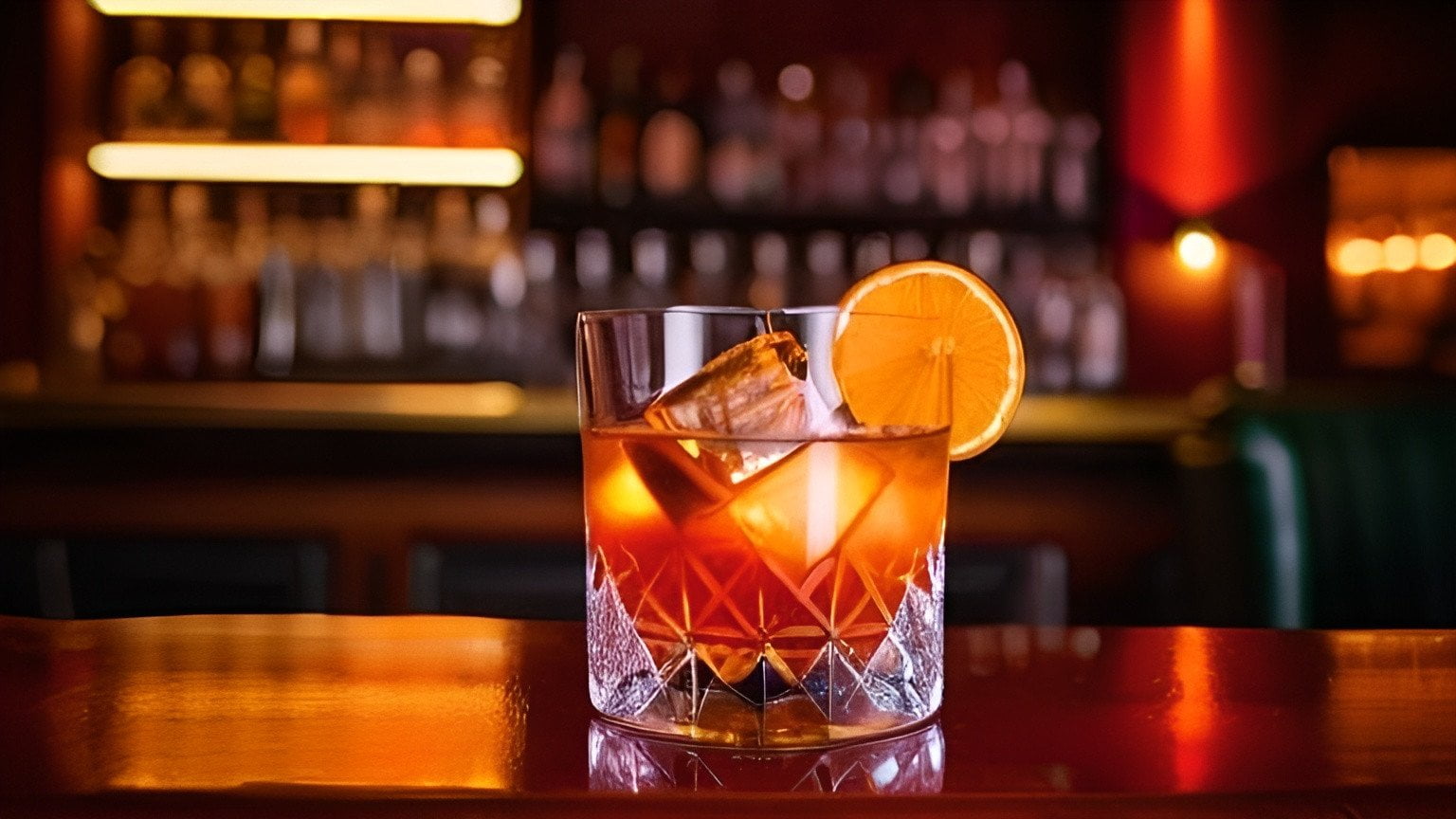
The Old Fashioned commands respect as the grandfather of American cocktails, a drink so fundamental that it defined what a cocktail could be. When bartenders in the 1880s began adding excessive syrups and liqueurs to traditional drinks, old-school patrons demanded their whiskey be prepared the “old-fashioned way” – with just sugar, bitters, and a splash of water to complement the spirit.
This amber-hued masterpiece delivers a flavor journey that begins with aromatic orange oils and warm spice, followed by the rich complexity of aged whiskey, finishing with a gentle sweetness that never overwhelms. The Old Fashioned represents everything a cocktail should be: balanced, spirit-forward, and timeless. Its enduring popularity stems from its ability to highlight premium whiskey while adding just enough enhancement to create something greater than the sum of its parts.
Old Fashioned Ingredients
- 2 oz (60 ml) bourbon or rye whiskey
- 1/4 oz (7.5 ml) simple syrup or 1 sugar cube
- 2-3 dashes Angostura bitters
- 1 dash orange bitters (optional)
- Orange peel for garnish
- Maraschino cherry for garnish (optional)
- Large ice cube or sphere
How to Make an Old Fashioned
Equipment needed: mixing glass or rocks glass, bar spoon, jigger, muddler (if using sugar cube)
- Place the sugar cube (or add simple syrup) in your rocks glass
- Add 2-3 dashes of Angostura bitters and 1 dash of orange bitters if using
- If using a sugar cube, add a splash of water and muddle gently until the sugar dissolves
- Add the whiskey and stir to combine all ingredients
- Add your large ice cube or sphere to the glass
- Stir for 20-30 seconds to chill and dilute properly
- Express the oils from an orange peel by holding it over the glass and giving it a firm twist
- Run the orange peel around the rim of the glass, then drop it in
- Add a maraschino cherry if desired
- Serve immediately with a bar spoon for stirring
Alternative Ingredients and Substitutes
- Whiskey alternatives: Rye whiskey creates a spicier, more robust flavor profile. Canadian whisky offers smoothness with subtle complexity. Japanese whisky brings delicate, refined notes.
- Sweetener options: Maple syrup adds rich, earthy sweetness. Demerara syrup provides molasses depth. Raw sugar creates more complex sweetness than refined alternatives.
- Bitters variations: Orange bitters enhance citrus notes. Walnut bitters add nutty complexity. Chocolate bitters bring dessert-like richness. Peychaud’s bitters offer cherry and anise hints.
- Garnish alternatives: Lemon peel brightens the drink. Grapefruit peel adds bitter complexity. Smoked orange peel introduces aromatic intrigue.
History and Origins
The Old Fashioned emerged during the 1880s as a reaction against increasingly elaborate cocktail preparations that masked the base spirit’s character. The Pendennis Club in Louisville, Kentucky, claims credit for the drink’s creation, with bartender Martin Cuneo reportedly crafting the cocktail for Colonel James E. Pepper, a prominent bourbon distiller. Pepper then brought the recipe to the Waldorf-Astoria Hotel in New York City, where it gained widespread recognition.
However, competing origin stories exist. Some accounts trace the drink’s development to Chicago’s Union League Club, while others suggest it evolved naturally across multiple establishments as patrons requested their whiskey prepared in the traditional manner. The phrase “old-fashioned” itself appeared in bartending manuals as early as 1888, describing any cocktail made in the original style with minimal ingredients.
George Kappeler’s 1895 book “Modern American Drinks” includes one of the first published Old Fashioned recipes, cementing its place in cocktail literature. The drink’s popularity continued through Prohibition, when home bartenders appreciated its simple ingredient list, though quality suffered due to inferior spirits. Post-Prohibition bars often bastardized the recipe with muddled fruit and excessive sweeteners, leading purists to wage ongoing battles for authenticity that continue today.
Flavor Profile
The first sip greets you with bright orange oils dancing across your palate, immediately followed by the warm spice complexity of bitters creating an aromatic foundation. The whiskey’s character emerges as the dominant force – whether bourbon’s vanilla and caramel sweetness or rye’s peppery grain assertiveness – while the sugar provides just enough sweetness to round harsh edges without masking the spirit’s personality.
Mid-palate reveals the drink’s sophisticated balance, where dilution from melting ice opens up the whiskey’s deeper notes. Barrel char, oak tannins, and aged complexity unfold gradually, supported by the bitters’ botanical intricacy. The finish lingers pleasantly with whiskey warmth, subtle spice, and a gentle sweetness that invites another sip. Each element supports rather than competes, creating a harmonious whole that showcases why this formula has endured for over a century.
Serving Suggestions
Serve in a heavy rocks glass or old fashioned glass, which provides the perfect vessel for the drink’s contemplative nature. The wide rim allows the orange oils to release their aroma with each sip, while the substantial weight feels appropriate for such a serious cocktail. Temperature matters significantly – the drink should be cold but not over-diluted, achieved through proper stirring with a single large ice cube that melts slowly.
Present the orange peel garnish prominently, either floating on the surface or perched on the glass rim. The visual simplicity reflects the drink’s no-nonsense philosophy. This cocktail suits evening occasions, particularly during cooler months when whiskey’s warming qualities feel most welcome. It serves as an excellent aperitif before dinner or a contemplative nightcap, though its strength makes it unsuitable for casual daytime consumption.
Food Pairings
- Grilled ribeye steak: The whiskey’s oak notes complement charred meat flavors while the drink’s strength stands up to rich beef
- Dark chocolate truffles: Bourbon’s vanilla sweetness harmonizes with cocoa while bitters add spice complexity
- Smoked salmon appetizers: The cocktail’s sophistication matches elegant presentations, with orange oils brightening rich fish
- Aged cheddar and charcuterie: Sharp cheese and cured meats echo the drink’s mature, developed flavors
- Maple-glazed pork tenderloin: Natural sweetness pairing that enhances both the whiskey and the meat’s caramelization
- Oysters Rockefeller: The drink’s bold character provides interesting contrast to delicate shellfish preparations
- Pecan pie: Southern dessert pairing where bourbon’s vanilla notes complement nuts and caramel
- Blue cheese-stuffed dates: Sweet and savory combination that plays beautifully with the cocktail’s balanced profile
Alcohol Content and Nutrition
- ABV: 30-35% (approximately 1.8 standard drinks)
- Calories: 150-180 per serving
- Carbohydrates: 2-4 grams (primarily from simple syrup)
- Sugar: 2-4 grams depending on sweetener amount
- Protein: 0 grams
- Fat: 0 grams
- Sodium: Minimal, trace amounts from bitters
Popular Variations
- Wisconsin Old Fashioned: Uses brandy instead of whiskey and includes muddled orange and cherry, finished with lemon-lime soda or sour mix
- Oaxaca Old Fashioned: Substitutes mezcal for whiskey and agave nectar for simple syrup, creating smoky complexity
- Paper Plane: Modern riff using bourbon, Aperol, Amaro Nonino, and lemon juice in equal parts
- Smoking Old Fashioned: Traditional recipe served under a glass dome filled with aromatic smoke
- Black Walnut Old Fashioned: Features black walnut bitters and walnut-infused whiskey for nutty depth
- Maple Old Fashioned: Replaces simple syrup with pure maple syrup and often includes maple-washed whiskey
Common Mistakes to Avoid
- Over-muddling fruit: Traditional recipes don’t include muddled oranges and cherries. These additions mask the whiskey’s character and create a messy, overly sweet drink.
- Using too much sweetener: The sugar should enhance, not overpower. Start with less and adjust to taste rather than following heavy-handed measurements.
- Wrong ice choice: Small ice cubes melt too quickly, creating an over-diluted drink. Use one large cube or sphere for proper temperature and dilution control.
- Skipping the orange oils: Simply dropping in orange peel without expressing the oils misses a crucial aromatic component that defines the drink’s character.
- Over-stirring: Excessive stirring creates too much dilution. Aim for 20-30 seconds of gentle stirring to achieve proper chilling and integration.
- Using low-quality whiskey: Since whiskey comprises 90% of the drink, using bottom-shelf spirits results in an unpalatable cocktail. Choose something you’d drink neat.
Conclusion
The Old Fashioned stands as cocktail perfection in its purest form, proving that great drinks don’t require complicated ingredient lists or flashy techniques. Its enduring appeal lies in the fundamental truth that quality ingredients treated with respect create something timeless. Mastering this cocktail teaches essential bartending principles while providing a template for countless variations and personal touches.
Every whiskey enthusiast should know how to craft a proper Old Fashioned, as it remains the ultimate test of both bartending skill and ingredient quality. Remember to enjoy responsibly and savor the craftsmanship that goes into each perfectly balanced sip.