
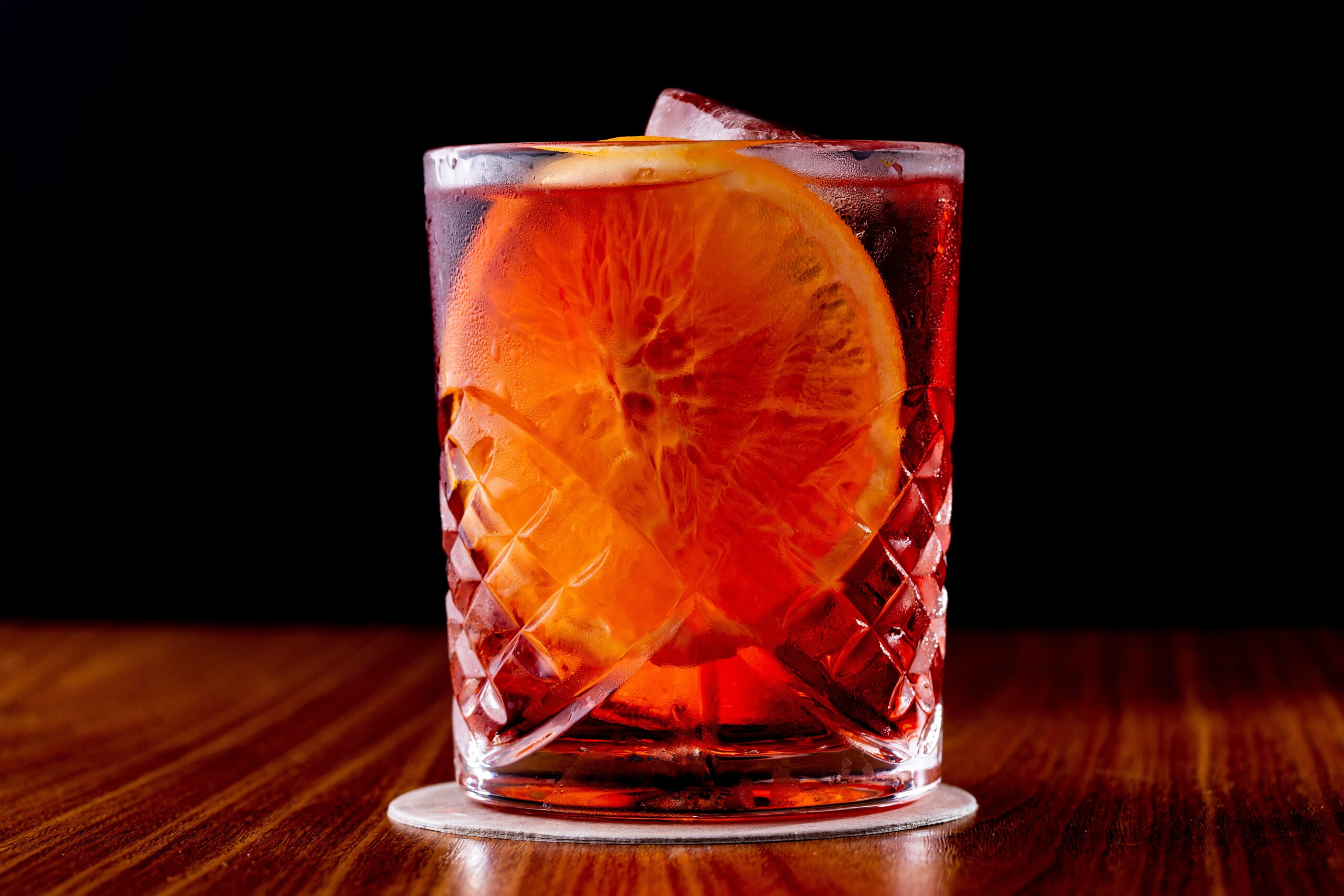
The Negroni stands as one of cocktail culture’s most polarizing drinks—you either embrace its bitter complexity or find yourself overwhelmed by its unapologetic intensity. This Italian aperitivo delivers equal parts gin, sweet vermouth, and Campari in a crimson symphony that challenges conventional notions of what a cocktail should taste like. Unlike drinks that mask alcohol behind sweetness, the Negroni celebrates every component with brutal honesty.
What makes this cocktail extraordinary is its mathematical precision wrapped in apparent simplicity. The famous 1:1:1 ratio creates a drink where no single ingredient dominates, yet each one remains distinctly present. Campari brings its signature bitter orange complexity, sweet vermouth adds herbal richness and balancing sweetness, while gin provides the juniper-forward foundation that prevents the drink from becoming cloying.
From Florence’s cafés to New York’s craft cocktail bars, the Negroni has become shorthand for sophisticated drinking. It represents a rite of passage for cocktail enthusiasts—the moment when bitter flavors transform from challenging to craveable. The drink’s enduring popularity stems from its ability to evolve with your palate while maintaining its essential character, making each sip both familiar and revelatory.
Negroni Ingredients
- 1 oz (30 ml) gin
- 1 oz (30 ml) sweet vermouth
- 1 oz (30 ml) Campari
- Orange peel for garnish
How to Make a Negroni
Equipment needed: mixing glass, bar spoon, jigger, strainer, rocks glass
- Fill a mixing glass with ice cubes
- Measure and pour 1 oz gin into the mixing glass
- Add 1 oz sweet vermouth to the mixing glass
- Pour 1 oz Campari into the mixing glass
- Stir the mixture for 30-40 seconds until well chilled
- Fill a rocks glass with one large ice cube or fresh ice
- Strain the cocktail over the ice in the rocks glass
- Express the oils from an orange peel over the drink by twisting it above the surface
- Drop the orange peel into the glass as garnish
Alternative Ingredients and Substitutes
Gin alternatives:
– London Dry Gin: Provides clean juniper focus that lets other ingredients shine
– Old Tom Gin: Adds subtle sweetness that softens Campari’s bite
– Navy Strength Gin: Creates a more powerful drink with increased alcohol backbone
Sweet Vermouth options:
– Carpano Antica Formula: Offers vanilla and spice notes that complement Campari beautifully
– Dolin Rouge: Delivers lighter, more floral characteristics
– Punt e Mes: Adds extra bitterness for those seeking more intensity
Campari substitutions:
– Aperol: Creates a lighter, less bitter version with orange sweetness
– Cappelletti: Provides wine-based bitterness with more herbal complexity
– Gran Classico: Offers similar bitterness with different spice profiles
History and Origins
The Negroni’s creation story centers on Count Camillo Negroni and his regular visits to Caffè Casoni in Florence during the 1910s. According to the most widely accepted account, Count Negroni asked bartender Fosco Scarselli to strengthen his usual Americano cocktail by replacing the soda water with gin. Scarselli obliged and changed the garnish from lemon to orange to signal the drink’s transformation.
However, some cocktail historians point to competing origin stories. The Negroni family themselves have disputed the timeline, with some accounts placing the drink’s invention as early as 1860s or as late as the 1920s. Another version credits Pascal Olivier de Negroni, a French general, with inspiring the drink’s creation in a different Italian establishment altogether.
What remains undisputed is the cocktail’s rise from regional Italian specialty to international phenomenon. The drink gained traction throughout Italy during the 1920s and eventually crossed the Atlantic, appearing in American cocktail guides by the mid-20th century. The craft cocktail renaissance of the 2000s brought renewed attention to the Negroni, with bartenders celebrating its perfect balance and using it as a canvas for creative variations.
Gaspare Campari’s bitter liqueur, created in 1860, provided the essential component that makes the Negroni possible. Without this distinctive Italian amaro, the drink simply couldn’t exist in its current form, linking the cocktail’s identity directly to Italian drinking culture and the country’s long tradition of bitter digestifs and aperitifs.
Flavor Profile
The first sip of a well-made Negroni delivers an immediate rush of bitter orange from the Campari, followed quickly by the gin’s juniper brightness cutting through the intensity. This initial impact might surprise newcomers, but it quickly gives way to the sweet vermouth’s herbal complexity—notes of vanilla, cherry, and warming spices that provide crucial balance to Campari’s aggressive bitterness.
As the drink settles on your palate, the three ingredients begin their intricate dance. The gin’s botanical elements emerge more clearly, often revealing citrus peel, coriander, or angelica root depending on the brand chosen. Meanwhile, the sweet vermouth’s wine base adds body and depth, preventing the cocktail from becoming one-dimensional. Campari’s bitterness evolves from sharp and medicinal to pleasantly herbal, with hints of orange peel, rhubarb, and gentian root becoming apparent.
The finish lingers with warming alcohol and a pleasant bitter aftertaste that actually encourages another sip. This is the Negroni’s greatest trick—its bitterness becomes increasingly appealing as your palate adjusts, creating a drink that improves with each taste. The orange peel garnish adds essential aromatic oils that brighten the entire experience, providing citrus notes that complement rather than compete with the liquid beneath.
Serving Suggestions
The Negroni demands a rocks glass filled with one large ice cube, which melts slowly and provides gentle dilution without watering down the drink too quickly. The large surface area of a rocks glass also allows the orange peel’s aromatic oils to collect above the liquid, enhancing the drinking experience with each sip.
Temperature plays a crucial role in the Negroni’s enjoyment. Serve it ice-cold to tame Campari’s intensity, but allow slight warming as you drink to reveal the vermouth’s complexity. The cocktail works beautifully as an aperitif before dinner, stimulating the appetite with its bitter components, or as a contemplative evening drink for those seeking something more sophisticated than wine or beer.
Seasonally, the Negroni shines brightest during fall and winter months when its warming alcohol and complex flavors complement cooler weather. However, its Italian aperitivo roots make it equally appropriate for summer evening gatherings, especially when served alongside small plates and good conversation. The drink’s striking color makes it particularly photogenic for special occasions and dinner parties where presentation matters.
Food Pairings
- Prosciutto and melon: The sweet fruit balances Campari’s bitterness while cured meat echoes the cocktail’s savory complexity
- Aged Parmigiano-Reggiano: Hard cheese’s nutty crystals complement the vermouth’s wine notes
- Dark chocolate: Bitter cacao harmonizes with Campari while providing richness against the gin’s botanicals
- Marcona almonds: Salty, buttery nuts enhance the drink’s Italian character
- Beef carpaccio: Raw meat’s richness stands up to the cocktail’s intensity
- Olive tapenade on crostini: Briny olives echo the drink’s savory herbal qualities
- Burrata with roasted peppers: Creamy cheese softens the bitterness while peppers add complementary sweetness
- Spicy salami: Bold flavors match the cocktail’s intensity without being overwhelmed
Alcohol Content and Nutrition
- ABV: 24-28% (approximately 1.8 standard drinks)
- Calories: 190-220 per serving
- Carbs: 8-12 grams (primarily from vermouth and Campari)
- Sugar: 6-10 grams (from sweet vermouth’s residual sugars)
- Protein: 0 grams
- Fat: 0 grams
Popular Variations
- Negroni Sbagliato: Replaces gin with prosecco for a lighter, effervescent version popularized in Milan
- White Negroni: Uses Lillet Blanc and Suze instead of vermouth and Campari for a pale, equally bitter alternative
- Boulevardier: Substitutes bourbon for gin, creating a whiskey-based cousin with American character
- Old Pal: Uses rye whiskey and dry vermouth instead of gin and sweet vermouth for a drier profile
- Mezcal Negroni: Swaps gin for mezcal, adding smoky agave notes that complement Campari’s bitterness
Common Mistakes to Avoid
- Using cheap vermouth: Vermouth represents one-third of the drink, so low-quality bottles create harsh, unbalanced cocktails that highlight alcohol burn over complexity
- Skipping the orange peel: The citrus oils are essential for aroma and flavor balance, not just decoration
- Over-diluting with small ice: Multiple small cubes melt too quickly, watering down the carefully balanced 1:1:1 ratio before you finish drinking
- Not stirring long enough: Inadequate stirring leaves the drink warm and fails to properly integrate the three distinct ingredients
- Using bottled orange juice instead of peel: Juice adds unwanted sweetness and lacks the essential oils that make the garnish crucial
- Serving in the wrong glass: Martini glasses or coupes don’t provide proper dilution from ice and concentrate the alcohol too intensely
Conclusion
The Negroni’s enduring appeal lies in its refusal to compromise or apologize for its bold character. This cocktail rewards patience and an open mind, revealing new layers of complexity as your palate develops an appreciation for bitter flavors. Experimentation with different gins and vermouths can create entirely new drinking experiences while maintaining the drink’s essential DNA.
Master the classic 1:1:1 ratio first, then explore the countless variations that have emerged from this Italian masterpiece. Each adjustment teaches valuable lessons about balance, flavor interaction, and the art of cocktail construction. Remember to enjoy responsibly and savor the complexity that makes each sip worthwhile.