
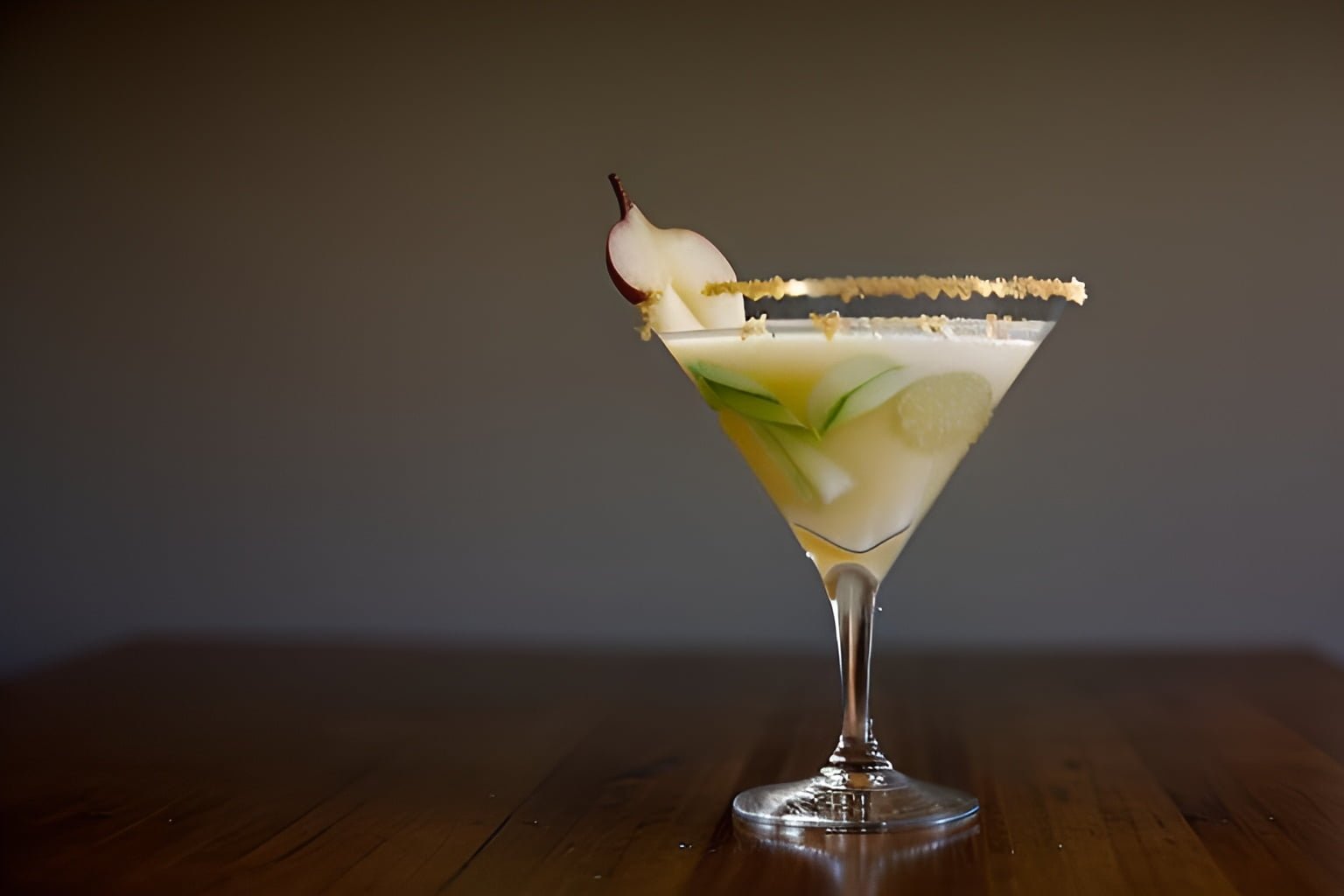
The Asian pear martini transforms the classic vodka cocktail with the delicate sweetness and crisp texture of Asian pears, also known as apple pears or nashi. This sophisticated drink captures the fruit’s unique characteristics – honeyed flavor with hints of vanilla and a clean, refreshing finish that sets it apart from traditional fruit martinis.
Asian pears bring an elegant subtlety to cocktails that many fruits can’t match. Unlike the aggressive sweetness of tropical fruits or the tartness of citrus, Asian pears offer gentle flavor that complements rather than overwhelms premium vodka. The result is a martini that feels both familiar and exotic, perfect for impressing guests who think they’ve tried every martini variation.
This cocktail represents the modern evolution of the martini family, where seasonal and international ingredients expand the boundaries of what we consider classic cocktails. The Asian pear martini bridges Eastern and Western flavors, creating something that feels both contemporary and timeless.
Asian Pear Martini Ingredients
- 2.5 oz (75 ml) premium vodka
- 0.5 oz (15 ml) elderflower liqueur
- 0.75 oz (22 ml) fresh Asian pear juice
- 0.25 oz (7 ml) fresh lime juice
- 0.25 oz (7 ml) simple syrup
- Thin Asian pear slice for garnish
- Optional: edible flower for garnish
How to Make an Asian Pear Martini
Equipment needed: cocktail shaker, jigger, fine mesh strainer, chilled martini glass, bar spoon
- Chill your martini glass by placing it in the freezer for at least 10 minutes or filling it with ice water.
- If making fresh Asian pear juice, peel and core one ripe Asian pear, then muddle or blend the flesh and strain through fine mesh to extract the juice.
- Add vodka, elderflower liqueur, Asian pear juice, lime juice, and simple syrup to your cocktail shaker.
- Fill the shaker with ice, ensuring the liquid is well-covered.
- Shake vigorously for 12-15 seconds to properly chill and dilute the cocktail.
- Empty your chilled martini glass of ice water if using that method.
- Double strain the cocktail through both the shaker strainer and fine mesh strainer into the chilled glass.
- Cut a thin slice of Asian pear, making a small slit to perch it on the glass rim.
- Add an edible flower if desired for extra visual appeal.
- Serve immediately while properly chilled.
Alternative Ingredients and Substitutes
- Vodka alternatives: Gin creates an herbal version with more complexity. Premium sake adds authentic Asian character while maintaining smoothness.
- Elderflower liqueur substitutes: St-Germain is the gold standard, but elderflower cordial works with reduced simple syrup. White grape juice mixed with honey provides floral sweetness without alcohol.
- Asian pear alternatives: Bartlett pear juice works but lacks the characteristic crispness. White grape juice with a splash of apple juice mimics the flavor profile reasonably well.
- Lime juice options: Lemon juice provides different acidity that’s brighter but less complex. Yuzu juice elevates the Asian theme with sophisticated citrus notes.
- Simple syrup variations: Honey syrup adds depth and complements the pear’s natural sweetness. Vanilla simple syrup enhances the fruit’s subtle vanilla undertones.
History and Origins
The Asian pear martini emerged during the early 2000s cocktail renaissance, when bartenders began incorporating international ingredients into classic American cocktails. Unlike drinks with single-point origins, this martini variation developed simultaneously across multiple upscale establishments in cities with significant Asian populations, particularly in California and New York.
The drink gained popularity as Asian pears became more widely available in American supermarkets and farmers’ markets. Bartenders in Los Angeles and San Francisco were among the first to experiment with the fruit, recognizing its potential to add sophistication to vodka-based cocktails without overwhelming other ingredients.
The combination with elderflower liqueur, particularly St-Germain, became standard practice around 2007-2008, when the French liqueur gained widespread adoption in American cocktail culture. This pairing proved ideal because elderflower’s floral notes complement Asian pear’s delicate sweetness without competing for attention.
Most accounts trace the cocktail’s refinement to upscale hotel bars and Asian fusion restaurants, where the drink’s elegant presentation and cross-cultural appeal matched the sophisticated dining atmosphere. The cocktail represents the broader trend of the 2000s and 2010s toward seasonal, fresh ingredients in cocktails.
Flavor Profile
The first sip reveals the Asian pear’s signature sweetness – gentle and honeyed without cloying intensity. The fruit’s natural vanilla undertones emerge immediately, creating an almost creamy sensation despite the cocktail’s clear appearance. Premium vodka provides clean alcohol warmth that carries the pear’s delicate flavors without masking them.
Elderflower liqueur adds floral complexity in the middle palate, creating layers that unfold as you sip. The combination feels sophisticated rather than simple, with each ingredient maintaining its identity while contributing to a cohesive whole. Lime juice provides just enough acidity to prevent the drink from becoming too sweet, adding brightness that makes each sip as appealing as the first.
The finish is remarkably clean and crisp, mirroring the Asian pear’s natural texture. Unlike heavier fruit martinis that can feel syrupy, this cocktail maintains lightness throughout. The aftertaste carries subtle floral notes from the elderflower, with a whisper of the pear’s characteristic vanilla sweetness that invites another sip.
Serving Suggestions
Serve in a chilled coupe or traditional martini glass to showcase the cocktail’s pale golden color and elegant garnish. The wide rim of a coupe glass allows the subtle aromas to concentrate, enhancing the drinking experience. Temperature is crucial – the cocktail should be served ice-cold to maintain the crisp, refreshing quality that makes Asian pears so appealing.
Present the drink immediately after preparation, as the fresh fruit elements are most vibrant when recently mixed. The thin pear slice garnish should be fresh and firm, cut just before serving to prevent browning. An edible flower like a small orchid or pansy adds visual elegance for special occasions.
The Asian pear martini excels as a fall cocktail when Asian pears reach peak ripeness, though quality fruit is available year-round in most markets. The drink works beautifully at dinner parties, particularly when serving Asian-inspired cuisine or sophisticated appetizers. Its elegant appearance and approachable flavor profile make it ideal for cocktail parties where you want to offer something unique but not challenging.
Food Pairings
- Seared scallops with ginger: The cocktail’s delicate sweetness complements the scallops’ natural sweetness while the ginger adds warmth that bridges Asian flavors.
- Prosciutto and melon appetizers: Both the cocktail and appetizer share fruit-forward profiles, creating harmonious flavor progression.
- Asian pear and brie crostini: Echoing the cocktail’s main ingredient while adding creamy richness that contrasts beautifully with the drink’s crispness.
- Sushi and sashimi: The clean, refreshing nature of the martini cleanses the palate between different fish preparations.
- Duck breast with five-spice: The cocktail’s subtle sweetness balances the rich meat and warming spices.
- Goat cheese and honey tartlets: Complementary sweetness and creamy textures that enhance both the food and drink.
- Tempura vegetables: Light, crispy preparations that won’t overwhelm the cocktail’s delicate flavors.
- Asian chicken lettuce wraps: Fresh ingredients and bright flavors that match the cocktail’s clean profile.
Alcohol Content and Nutrition
- ABV: 20-24% (approximately 1.8 standard drinks per serving)
- Calories: 180-210 per serving, primarily from alcohol and fruit sugars
- Carbohydrates: 8-12 grams, mainly from pear juice and simple syrup
- Sugar: 7-10 grams from natural fruit sugars and added sweeteners
- Protein: Less than 1 gram
- Fat: 0 grams
- Fiber: 0 grams (strained fruit juice contains no fiber)
Popular Variations
- Sparkling Asian Pear Martini: Top with 1 oz of prosecco or champagne for effervescence and celebration-worthy presentation.
- Spiced Asian Pear Martini: Add a dash of cinnamon simple syrup and garnish with a cinnamon stick for autumn warmth.
- Ginger Asian Pear Martini: Include 0.25 oz of fresh ginger juice for Asian-inspired heat and complexity.
- Sake Asian Pear Martini: Replace half the vodka with premium junmai sake for authentic Asian character.
- Rosemary Asian Pear Martini: Muddle fresh rosemary in the shaker for herbal earthiness that complements the fruit’s sweetness.
Common Mistakes to Avoid
- Using overripe pears: Mushy fruit creates cloudy juice and overly sweet flavor. Choose firm, crisp Asian pears that give slightly when pressed.
- Skipping the double strain: Asian pear pulp can make the cocktail grainy. Always use a fine mesh strainer for smooth texture.
- Over-shaking: More than 15 seconds of shaking can bruise the delicate fruit flavors and create excessive dilution.
- Wrong glass temperature: Serving in a warm glass destroys the crisp, refreshing quality that defines this cocktail.
- Pre-making pear juice: Fresh juice oxidizes quickly and loses its bright flavor. Extract juice just before mixing each cocktail.
- Cutting garnish too early: Asian pear slices brown rapidly when exposed to air. Cut garnish immediately before serving.
Conclusion
The Asian pear martini demonstrates how international ingredients can elevate familiar cocktail formats into something special. The drink succeeds because it respects both the Asian pear’s delicate nature and the martini’s need for balance and sophistication. Each element serves a purpose, creating complexity without confusion.
Experimenting with different vodka brands and elderflower liqueurs can yield subtle but meaningful variations in the final cocktail. The drink rewards attention to detail – from selecting perfectly ripe fruit to proper chilling – with a sophisticated cocktail that feels both exotic and approachable. Remember to enjoy responsibly and appreciate the craftsmanship that goes into each perfectly balanced sip.